From Fear to Precision: How AI Is Transforming Early Cancer Detection
Introduction: Changing the Story of Cancer
For generations, cancer has been one of the most feared words in healthcare. The moment someone hears the diagnosis, it often brings a wave of uncertainty, anxiety, and countless questions. Will it spread? Was it caught too late? What happens next?
Much of this fear has historically come from one major challenge: late detection.
In many cases, cancer does not show obvious symptoms in its early stages. By the time it is discovered, it may already be advanced, making treatment more complex and outcomes less predictable. This delay has been one of the biggest obstacles in improving survival rates worldwide.
But today, we are witnessing a powerful shift.
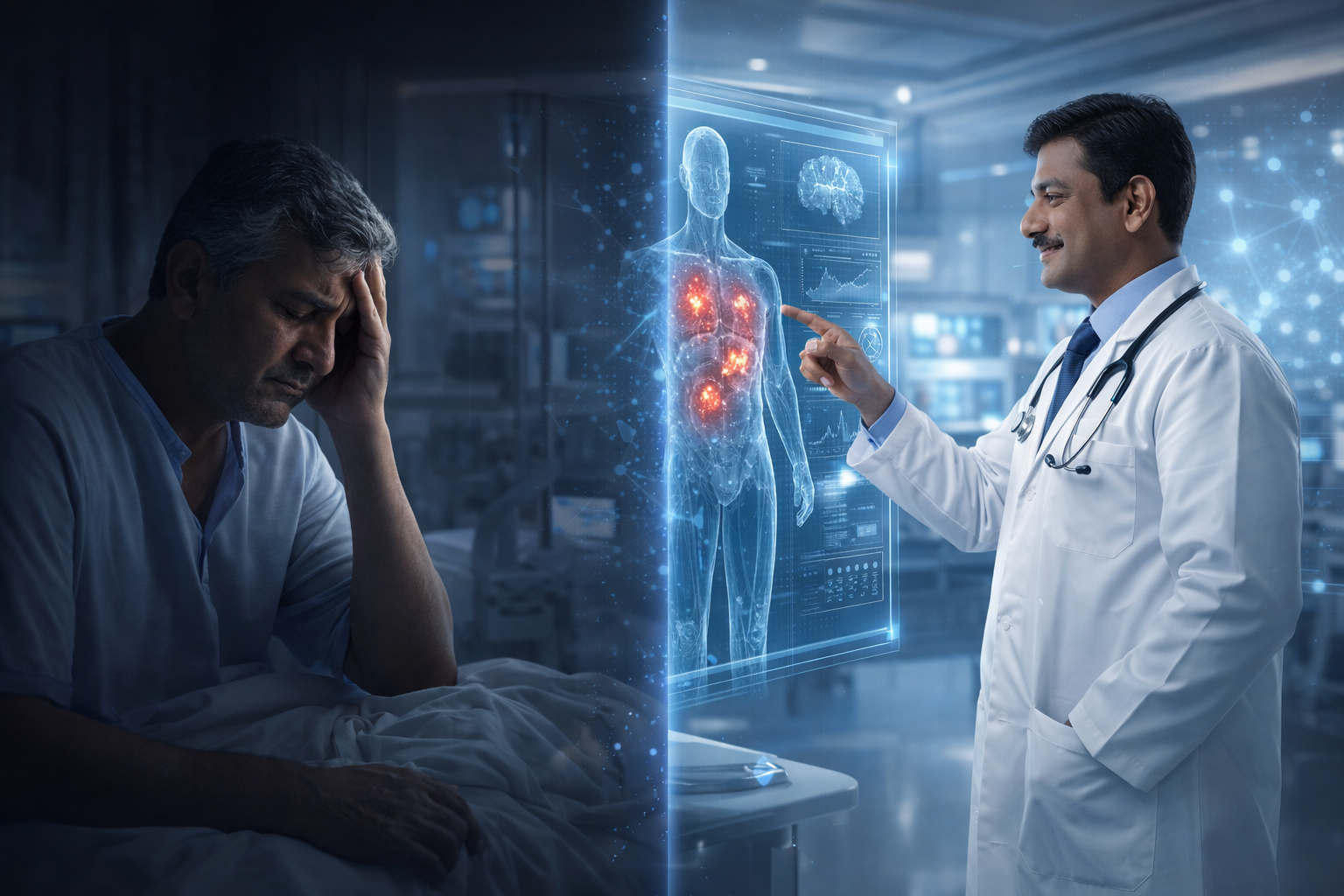
Artificial Intelligence (AI) is transforming how cancer is detected—moving us from a world driven by uncertainty and fear to one guided by precision, speed, and data-driven confidence.
At Brainox AI, this transformation is not just about technology. It is about empowering doctors, supporting patients, and creating a healthcare system where early detection becomes the norm rather than the exception.
Understanding the Root of Fear in Cancer Detection
To understand how AI is changing cancer detection, we first need to understand why fear exists in the first place.
1. The Silent Nature of Cancer
Many cancers develop quietly. In the early stages, there may be no noticeable symptoms. This means patients often don’t seek medical attention until the disease has progressed.
2. Uncertainty in Diagnosis
Even with advanced medical imaging, there can be ambiguity:
- Is this a tumor or a harmless abnormality?
- Should we monitor or act immediately?
- Is the cancer aggressive or slow-growing?
This uncertainty can delay decision-making and increase patient anxiety.
3. Human Limitations
Doctors are incredibly skilled, but they face challenges:
- Reviewing hundreds of scans daily
- Identifying extremely subtle patterns
- Working under time pressure
Even the most experienced professionals can miss early signs that are nearly invisible.
4. Emotional Burden
For patients, waiting for results can be one of the most stressful experiences. Every delay adds to the emotional weight of the situation.
The Shift from Fear to Precision
Artificial Intelligence is helping to reduce this uncertainty.
Instead of relying solely on human interpretation, AI introduces:
- Data-driven analysis
- Pattern recognition at scale
- Consistent and repeatable results
This shift is fundamentally changing how we approach early cancer detection.
What Is AI in Cancer Detection?
At its core, AI in healthcare refers to systems that can analyze medical data and learn from it.
In cancer detection, AI primarily works with:
- Medical images (X-rays, CT scans, MRIs)
- Pathology slides
- Patient records
- Genetic data
Using advanced algorithms, AI systems can identify patterns associated with cancer—often earlier and more accurately than traditional methods.
How AI Detects Cancer: A Simple Breakdown
Let’s simplify the process.
Step 1: Learning from Data
AI systems are trained on thousands or even millions of medical images. Each image is labeled:
- Cancer present
- Cancer absent
This training helps the system understand what to look for.
Step 2: Recognizing Patterns
AI uses deep learning models (similar to how the human brain processes information) to detect:
- Irregular cell structures
- Abnormal growth patterns
- Tiny visual cues invisible to the human eye
Step 3: Analyzing New Cases
When a new scan is uploaded:
- The AI analyzes the image
- Highlights suspicious areas
- Provides a confidence score
This acts as a powerful support tool for doctors.
Step 4: Continuous Improvement
AI systems improve over time as they process more data. This means accuracy keeps increasing.
Real-World Impact: Where AI Is Already Making a Difference
AI is no longer theoretical—it is actively being used in healthcare.
Breast Cancer Detection
AI-powered mammography tools can detect tumors earlier and more accurately.
Benefits:
- Reduced false positives
- Fewer unnecessary biopsies
- Faster diagnosis
Lung Cancer Screening
Lung cancer is often detected late. AI helps by identifying tiny nodules in CT scans.
Impact:
- Earlier detection
- Improved survival rates
- Better risk assessment
Skin Cancer Diagnosis
AI can analyze images of skin lesions using simple cameras.
This enables:
- Remote diagnosis
- Faster screening
- Accessibility in rural areas
Pathology Analysis
AI can scan biopsy samples and detect abnormal cells much faster than manual analysis.
Why Early Detection Matters More Than Ever
Early detection is the single most important factor in improving cancer outcomes.
When cancer is detected early:
- Treatment is more effective
- Survival rates increase significantly
- Costs are lower
- Quality of life improves
AI is making early detection more reliable and accessible.
Benefits of AI in Early Cancer Detection
1. Speed
AI can analyze images in seconds, reducing waiting time for patients.
2. Accuracy
AI minimizes human error and improves diagnostic precision.
3. Consistency
Unlike humans, AI provides consistent results every time.
4. Scalability
AI can handle large volumes of data, making it ideal for busy healthcare systems.
5. Accessibility
AI tools can be deployed in remote areas, bringing advanced diagnostics to underserved populations.
AI and Doctors: A Powerful Partnership
A common concern is whether AI will replace doctors.
The truth is: AI enhances doctors—it does not replace them.
Doctors provide:
- Clinical judgment
- Contextual understanding
- Patient interaction
AI provides:
- Data analysis
- Pattern recognition
- Decision support
Together, they create a more effective healthcare system.
Challenges to Overcome
While AI is promising, there are challenges:
Data Quality
AI needs high-quality data to function accurately.
Privacy Concerns
Patient data must be protected.
Integration
Hospitals need systems to integrate AI into workflows.
Trust
Both doctors and patients need to trust AI systems.
The Future of Early Cancer Detection
The future is moving toward predictive and preventive healthcare.
Predictive AI
AI will identify cancer risks before the disease develops.
Real-Time Monitoring
Wearables and smart devices will detect early warning signs.
Personalized Medicine
AI will tailor detection and treatment plans to individuals.
Global Reach
AI will bring advanced diagnostics to every corner of the world.
Brainox AI’s Vision
At Brainox AI, we believe in building solutions that are:
- Practical
- Scalable
- Human-centered
Our mission is to:
- Empower healthcare professionals
- Improve early detection accuracy
- Reduce diagnostic delays
- Make advanced healthcare accessible
We are focused on turning cutting-edge AI into real-world impact.
A More Human Future with AI
While AI is a technological breakthrough, its true value lies in its human impact.
It means:
- A diagnosis caught earlier
- A treatment started sooner
- A life extended
- A family given hope
AI is not removing the human element from healthcare—it is strengthening it.
Conclusion: From Fear to Confidence
Cancer detection is undergoing a transformation.
What was once driven by uncertainty is now guided by precision.
What once caused fear is now being approached with confidence.
Artificial Intelligence is not just improving detection—it is redefining what is possible.
At Brainox AI, we are proud to be part of this journey.
Because the future of healthcare is not just about technology.
It is about creating a world where early detection is the norm, not the exception.
Where patients feel informed, not afraid.
Where doctors are empowered, not overwhelmed.
And where cancer is no longer a story of fear—but one of precision, possibility, and hope.
Final Thought
We are entering a new era in healthcare.
And this time, we are better prepared.
